Share This

Thursday, 17 April 2025

China establishes world's first three-satellite constellation in the Earth-moon region of space; Space rescue: Chinese astro-engineers share a satellite-saving mission that spans 123 days and covers 8.5 million kilometers


Photo: VCG


Chinese President Xi Jinping will pay a state visit to Russia from May 7 to 10 and attend the celebrations marking the 80th anniversary of the Victory in the Great Patriotic War in Moscow, at the invitation of President Vladimir Putin of the Russian Federation. This year marks the 80th anniversary of the victory of the Chinese People's War of Resistance Against Japanese Aggression, the Great Patriotic War of the Soviet Union and the World Anti-Fascist War. Xi's Russia visit will not only deepen bilateral ties at the level of head-of-state diplomacy but will also hold broader significance for the world.

The international order is currently facing multiple shocks, and the underlying causes are closely linked to the erosion of the view of the World War II (WWII) history. 

The rise of unilateralism has broken with the post-war tradition of multilateral cooperation; the spread of historical revisionism has intensified the fragmentation of international norms; and the resurgence of exclusionary ideologies has led to social division. Some right-wing politicians use various means to obscure and distort the history of WWII, while others seek to gain political benefits and solidify their positions by whitewashing fascism. Even more dangerously, the flawed historical view is feeding a vicious cycle alongside geopolitical conflicts: In an attempt at containment, they denigrate - or even deny - the historical contributions of China and Russia; and in the name of a "free and open Indo-Pacific," they seek to breach the pacifist postwar constitution and resurrect military adventurism.

Against this backdrop, the joint advocacy by China and Russia to foster a right view of the WWII history, defend the outcomes of the victory in the war and the post-war international order, and uphold international fairness and justice serves as an important guiding force for maintaining world peace and stability.

The war that successfully ended 80 years ago was fundamentally a battle between justice and evil. It was a magnificent feat of the international community overcoming boundaries of nation, race, and ideology to unite against fascist aggression. From the Normandy landings in Europe to the Pacific theater in Asia, from the Battle of Stalingrad to China's brave resistance against Japanese invasion, and across Asia, Africa, and Latin America, countries joined forces in an unprecedented effort to defeat the Axis powers' imperial ambitions. This demonstrated the unparalleled power of multilateral cooperation in the face of global threats. 

We will also never forget that the victory of the Chinese People's War of Resistance Against Japanese Aggression was inseparable from the robust support of the international community. The Soviet Union's dispatch of troops to Northeast China hastened the collapse of Japanese imperialism; the US supplied China with aircraft and artillery under the Lend-Lease; and the 1943 Cairo Declaration expressly demanded that Japan return all the Chinese territories it had seized - including Taiwan. 80 years ago, the vast majority of the world's nations stood shoulder to shoulder against a common foe in pursuit of a shared ideal of peace - a fact that all humanity should remember forever.

The victory in WWII was a triumph of multilateral cooperation that transcended different systems and beliefs, overcoming fascist tyranny. This proves that the law of the jungle, where the strong prey on the weak, is not the right path for human development. It laid the foundation for an international order centered on the United Nations and gave rise to a wave of national liberation and peaceful development based on equality and self-determination among all nations. Fostering a right view of WWII history is also about defending a proper view of the international order.

The construction of the postwar international system further proved that multilateralism is not a temporary strategy in the game of great powers, but a conscious choice of civilization born from immense sacrifice. As the main theater in the East during World War II, China was not only a significant contributor to the World Anti-Fascist War but also a builder and maintainer of the post-war international order. China has always advocated the Five Principles of Peaceful Coexistence and has played a constructive role in alleviating regional crises through active diplomatic mediation. From proposing the concept of building a community with a shared future for mankind to introducing three major global initiatives, China is actively demonstrating what it means to uphold and defend a right view of WWII history. It is providing the world with a Chinese solution that transcends zero-sum games and promotes the development of the international order in a just and reasonable direction.

Standing at the crossroads of changes unseen in a century, humanity needs to learn from historical experience of WWII victory more than ever. As former German president Richard von Weizaecker said, "those who do not review history will be blind to reality." Promoting a correct understanding of World War II is inherently linked to upholding a just international order. Whether mediating regional conflicts or addressing global crises, countries must learn from history and adhere to the just principles established after the war. Only by anchoring ourselves in a correct historical perspective can humanity maintain a baseline of peace amid potential risks of de-globalization and conflict.

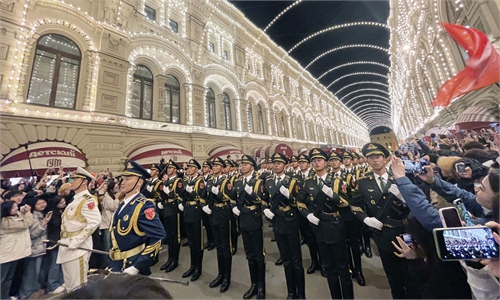
"Justice will prevail! Peace will prevail! The people will prevail!" These slogans were shouted by the Guard of Honor of the Chinese People's Liberation Army during the nighttime rehearsal for the Victory Day parade on May 9 in Moscow's Red Square, eliciting waves of cheers and applause from the audience. The three declarations of "will prevail" and the warm reception of the PLA are concrete manifestations of the appreciation and support for upholding and promoting a right view of WWII history. More people standing on the side of defending the right view of WWII history and upholding post-war international fairness and justice is the best way to commemorate the victory of the World Anti-Fascist War. - Global Times editorial

Tuesday, 15 April 2025

Telcos ordered to resolve Internet issues

DeepSeek Logo
Deepseekw https://www.deepseek.com/./深度求索

 TAPAH: Communic ations Minister Datuk Fahmi Fadzil has given all telecommunication companies until 5 pm on Sunday to submit solutions to the problem of poor Internet access nationwide, or face stern action.

Fahmi said he has contacted Malaysian Communications and Multimedia Commission (MCMC) executive chairman Tan Sri Mohamad Salim Fateh Din on Sunday morning and instructed telecommunications companies involved to respond promptly to the weak coverage feedback conveyed.

“Telecommunication companies need to be more proactive in resolving this issue. When it comes to collecting overdue bills, they’re lightning fast, but when we lodge complaints, it takes months.

“So I’ve had enough. If they fail to present swift and concrete solutions by 5 pm today, MCMC will begin enforcement action against them tomorrow,” he told reporters after visiting the National Information Dissemination Centre (NADI) in Air Kuning on Sunday.

Also present were Perak Communications, Multimedia and Non-Governmental Organisation (NGO) Committee chairman Mohd Azlan Helmi and Barisan Nasional candidate for the Ayer Kuning state byelection, Dr Mohamad Yusri

Bakir.

Fahmi said based on a drive test conducted by MCMC on March 5, many areas still fail to meet the Mandatory Standards on Quality of Service (MSQoS), which currently requires a minimum speed of 7.5 Mbps, which will be increased to 10 Mbps next year.

“The issue of Internet access is not only limited to Air Kuning, it is also affecting many other areas such as Belaga and Ulu Rajang in Sarawak, the new township of Serenia, the outskirts of Tambun, and even on Pangkor Island. Several Orang Asli villages have also been impacted,” he said.

He added that if the telecommunication companies failed to resolve the Internet access problem, they would face stricter enforcement measures, including hefty fines and penalties that could reach millions of ringgit.

“After we amended the Communications and Multimedia Act, which came into effect on Feb 11, fines and compounds that can be imposed on telcos will be significantly higher than before,” he said.

At the same time, Fahmi reminded netizens to be cautious when making statements or campaigning on social media, especially concerning the 3R issues (race, religion, royalty) during the Ayer Kuning byelection period.

“If there are individuals who upload extreme posts or 3R-related content, and are convicted in court, they may be fined up to RM500,000, compounded up to RM250,000, or face imprisonment. I hope all parties will conduct their campaigns in a responsible manner,” he said.

Fahmi said so far, no complaints have been received, but he expected campaign activities to pick up in the coming week.

When asked about Perikatan Nasional (PN) supporters using caricatures that seemingly mocked Prime Minister Datuk Seri Anwar Ibrahim and DAP secretary-general Anthony Loke, Fahmi said he was not surprised by the approach.

“If that’s how they want to campaign, so be it. That’s their way. Let us campaign based on facts, ideas, and what we can actually offer, not just insults and ridicule,” he said.- The Borneo Post (Sabah)

How to make a report to MCMC when your telco 

disappoints you 

https://malaysia.news.yahoo.com/report-mcmc-telco-disappoints-again-231249225.html


Sunday, 13 April 2025

Beijing: We have ‘will and means’ to counter tariffs

ation: Liu Rui/GT -    

DeepSeek | 深度求索

Big buyer: A container ship leaving Qingdao, China. United Nation’s data show US exports to China rose 684% between 2001 and 2024.— AP

BEIJING: China has called on the United States to remove unilateral tariffs as quickly as possible and work with it in the spirit of mutual respect, peaceful coexistence and win-win cooperation, in order to address respective concerns through dialogue and consultations on an equal footing, the Commerce Ministry says.

Chinese officials said on Wednesday that should Washington further intensify tariffs and restrictive measures against China, Beijing has the “firm will and abundant means” to fight until the end.

Their comments came after the State Council Information Office released on Wednesday a white paper titled China’s Position on Some Issues Concerning China-US Economic and Trade Relations, which noted that the recent US move of using tariffs as a coercive tool is a grave mistake and further exposes the typical unilateralist and bullying nature of the US government.

Since US President Donald Trump took office in late January, Washington has repeatedly imposed additional tariffs on China, and the tax rate on Chinese imports has now reached over 120%.

Noting that these actions could have a severe impact on China-US economic and trade relations, the white paper emphasised that the key is to respect each other’s core interests and major concerns and find proper solutions through dialogue and consultation.

The essence of China-US economic and trade relations is one of mutual benefit and win-win cooperation, despite the inevitable differences and friction that arise between the two countries due to their different stages of development and distinct economic systems, according to the document.

Trade data from the United Nations shows that the value of US goods exported to China reached US$143.55bil last year, up 648.4% compared with the US$19.18bil recorded in 2001.

The growth in US exports to China has far outpaced the 183.1% increase in overall US exports during the same period.

Detailing the white paper, a Commerce Ministry official said, “With firm will and abundant means, China will resolutely take countermeasures and fight until the end if the United States insists on further escalating economic and trade-restrictive measures.”

There is no winner in a trade war, and China does not want a trade war, the official emphasised, adding that the Chinese government “will by no means stand idle when the legitimate rights and interests of its people are being hurt and deprived”.

The official said that it is a typical act of unilateralism, protectionism and economic bullying for the United States to take tariffs as a weapon of exerting maximum pressure and pursuing self-interest.

Under the guise of pursuing “reciprocity” and “fairness”, the United States is engaging in zero-sum games and, in essence, seeking “America First” and “American exceptionalism”, the official said.

The United States is exploiting tariffs to subvert the existing international economic and trade order, prioritising US interests above the global common good, and sacrificing the legitimate interests of countries worldwide to serve its own hegemonic agenda, he added.

Noting that the United States is also deliberately severing the well-established global industrial and supply chains and breaking market-oriented free trade rules, the official said these practices seriously interrupt the economic development of countries around the globe and affect the long-term stable growth of the world economy.

Lin Jian, a spokesman for the Foreign Ministry, said at a daily news conference on Wednesday that “if the United States disregards the interests of the two countries and the international community and stubbornly persists in the tariff war and trade war, China stands ready to fight to the end”.

Cui Fan, a professor of international trade at the University of International Business and Economics in Beijing, said, “A trade war, for sure, produces no winner, but the United States is destined to suffer greater losses than others.”

On Tuesday, Goldman Sachs raised the odds of a recession in the United States to 45%, just a week after it said the odds were at 35%, as fears of an impending trade war increased.

It also revised its forecast for this year’s gross domestic product growth in the United States to 1.3%, down from 1.5% and cautioned about the possibility of a bear market.

Cui said the US tariff hikes will estrange allies, disrupt market dynamics, and provoke retaliatory actions that will reverberate throughout supply chains and hit US consumers hard.

More importantly, the measures fail to provide a clear path for the United States to regain its competitive edge in key industries, he added.

Navin Girishankar, president of the Economic Security and Technology Department at the Centre for Strategic and International Studies, said, “You can’t fight a trade war and then expect to win a tech war.”

Highlighting industries such as semiconductors, artificial intelligence and clean energy that largely rely on international collaboration, Girishankar said that tariffs would increase costs and reduce efficiency, eroding the ability of the United States bto compete in such sectors. — China Daily/ANN

Related posts:

America First’ cannot deprive other nations of development rights


RCEP shows Asia can act independently of US


Law must make strata watchdogs act

ation: Liu Rui/GT -    

DeepSeek | 深度求索  

  PETALING JAYA: From run-down facilities and dirty walkways to allegations of misused management funds, the issue of poor property and building management continues to plague stratified homes in Malaysia.

With the government now mulling changes to property and building management laws, stakeholders say the focus should be on improving enforcement by the commissioner of buildings (CoB).

The new laws must improve and mandate the CoB to enforce laws under the Strata Management Act (SMA) 2013, said Datuk Theng Book, chairman of the Strata Owners Association Malaysia.

“There’s been a serious lack of enforcement by CoBs. In most cases, they will pass the buck back to management bodies.

“Management corporations (MCs) and joint management committees (JMCs) do not have the authority to enforce the laws,” he said.

This then usually leads to long-drawn-out and expensive civil court cases, he said.

Theng said the new laws must also clarify how MCs or JMCs can use maintenance funds, and standardise maintenance fee rates in the growing trend of mixed development stratified projects.

“The maintenance fee rates for residential and commercial tenants can vary wildly from project to project,” he said.

Michelle Lai, director of property management company Auntie Michelle Resources (M) Sdn Bhd, says the problem is also due to a lack of standardised enforcement and training in the industry.

“There is no consistency as different management offices enforce different rules which leads to confusion, especially for owners and investors who have units in different buildings,” said Lai.

“Many JMCs are not professionally trained and lack the capacity to manage buildings properly.”

She added that new laws should have CoBs demanding greater accountability and professionalism from JMCs and MCs.

“CoBs can perform regular transparent audits of management bodies and set clear enforcement standard operating procedures.

“They should also conduct perio­dic on-site inspections to assess building safety, especially for ageing properties.

“In addition, there must be a mandatory guideline for sche­duled refurbishment and main­tenance of property,” she added.

Malaysian Institute of Property and Facility Managers president Ishak Ismail said any new pro­perty management laws must provide more enforcement mechanisms for management bodies.

On Tuesday, Housing and Local Government Minister Nga Kor Ming announced that new laws may be formulated to overcome the issue of poor management of stratified homes.

He said there was a shortage of licensed property management firms in Malaysia, with only 594 licensed firms serving 26,334 strata schemes or 2.9 million units of Malaysian strata properties.

This has led to a rise in unlicensed and unqualified property managers

Related posts:

Commissioner Of Buildings (COB) In Malaysia, And Their 6 Main Functions


High-rise living in below par, need professionalism in managing the property\


Thursday, 10 April 2025

America First’ cannot deprive other nations of development rights

Illustration: Liu Rui/GT -    

DeepSeek | 深度求索


On Wednesday, the US implemented higher tariffs on nearly 60 trade partners, including a 104 percent tariff on goods from China. This is undoubtedly a serious provocation to the world trade system and a direct blow to the stability of global industrial supply chains. In response, a Chinese Foreign Ministry spokesperson stated that the Chinese people's legitimate right to development cannot be deprived, and China's sovereignty, security and development interests are inviolable. On the same day, the Chinese government released the white paper, "China's Position on Some Issues Concerning China-US Economic, Trade Relations." The document points out that the rise of unilateralism and protectionism in the US has significantly impeded the course of normal economic and trade cooperation between the two countries. It criticizes the US for imposing trade restrictions, such as tariffs, under the banner of "America First." The US policy of unilateralism is not only a blatant infringement on the development rights of other nations but also a selfish and short-sighted approach that will ultimately backfire.

Development is a common pursuit of humanity and a fundamental right recognized by the United Nations Charter and the Universal Declaration of Human Rights. All countries and peoples should have equal rights to improve their economic and social conditions and raise the standard of living, with no hierarchy of priority. As the world's largest economy, the US has long benefited from the trade rules, yet when faced with its own structural economic issues, it chooses to shift the burden onto other countries. This is extremely selfish and irresponsible. The logic behind "America First" is rooted in unilateralism and power politics, attempting to reshape the rules of globalization through tariffs, technology blocks, and industrial decoupling. In essence, it is a crude violation and systematic deprivation of the universal development rights of all nations.

The most-favored-nation principle and bound tariffs commitments under the World Trade Organization (WTO) are cornerstones of the multilateral trading system that was initially led and shaped by the US. They also serve as crucial institutional safeguards for developing countries to achieve fair development rights. Multiple assessments have found that tariffs have dealt particularly heavy blows to developing countries, especially many of the least developed nations. Ensuring the stability and strong resilience of the supply chain is a necessary condition for the economic development of many countries, and foreign trade is an important way for a country to integrate into the process of globalization. However, the US is now preemptively setting up "gates" and "toll booths" along this path, even attempting to monopolize and manipulate other countries' development rights. This represents not only a regression in history, but also a betrayal of humanity's shared values.

The US unilateralism actions have already provoked widespread international countermeasures. Facing the unreasonable "reciprocal tariffs" imposed by the US, China firmly retaliates. It announced the additional tariffs on products imported from the US to 84 percent, effective from 12:01 pm Thursday, fulfilling its promise to "continue to the end" and demonstrating its commitment to defending the multilateral trade system. On Wednesday, a majority of the EU's 27 member states voted in favor of the counter-tariffs of 25 percent to hit around 21 billion euros ($23.2 billion) of US goods in retaliation for the duties imposed by the US last month on EU's steel and aluminum exports. Canada also declared its retaliatory 25 percent tariffs on vehicles imported from the US starting Wednesday. It is evident that even traditional allies are unwilling to foot the bill for "America First." This growing divergence reveals a hard truth: An "America First" approach that undermines globalization won't gain broad recognition and support from the international community. It will only lead to deeper isolation for the US, and the decline of its international credibility and moral standing will be inevitable.

Washington fantasizes about reshaping the global economic landscape through enacting tariff barriers, yet it underestimates its own dependence on global supply chains and the resilience of other countries' economies. Ironically, the "America First" policy has primarily undermined the development rights of the American people. High tariff policies have led to increased costs for US imported raw materials, which not only fail to revitalize the manufacturing sector but also result in shrinking profits or even large-scale bankruptcy for small and medium-sized enterprises. A study by the US-China Business Council finds that in the three years following 2018, the US lost approximately 245,000 jobs due to the trade war. "America First" cannot take away the development rights of other countries; it can only become synonymous with "self-inflicted consequences."

What we need in today's world is justice, not hegemony. Justice means respecting the development rights of all countries and resolving differences through dialogue within the framework of the WTO. The US, under the guise of "reciprocity," is actually implementing an "America First" policy, which not only cannot deprive other countries of their development rights but also exposes the shortsightedness of unilateralism and highlights the necessity of global cooperation. By cooperating to counter the "America First" policy, which goes against the historical trend, as well as firmly opposing various unilateral actions that challenge international consensus, the international community can better uphold the fair development rights of all countries and truly achieve shared prosperity. - Global Times editorial

Related :

The strong industry resistance to a US port fee proposal is a stark indication that unilateral measures weaponizing trade have collided with economic reality, facing fierce pushback from industries reliant on efficient global supply chains.