Share This

Wednesday, 17 December 2025

Malaysia PM Anwar makes sweeping Cabinet changes, including new trade and economy ministers

 The premier announced more than 25 changes to his Cabinet after previously saying that a major reshuffle was not on the cards.

Anwar Announces 28 Appointments, Portfolio Changes

 These are results for THE UNITY CABINET 2025,

Search instead for THE UNITYT CABINET 2025,

The premier announced more than 25 changes to his Cabinet after previously saying that a major reshuffle was not on the cards.

Anwar Announces 28 Appointments, Portfolio Changes


Malaysia Prime Minister Anwar Ibrahim shows a list of his Cabinet appointments after announcing a reshuffle on Dec 16, 2025. (Photo: Prime Minister’s Office of Malaysia/Afiq Hambali)

KUALA LUMPUR: Malaysian Prime Minister Anwar Ibrahim announced sweeping changes to his Cabinet on Tuesday (Dec 16), ending weeks of speculation over ministerial vacancies.

Notable changes - among more than 25 announced - include the appointments of United Malays National Organisation (UMNO) stalwart Johari Ghani as the new Investment, Trade and Industry Minister and Parti Keadilan Rakyat’s (PKR) Akmal Nasir as Economy Minister. There are 65 Cabinet posts in total. 

Johari was previously Minister for Plantations and Commodities while Akmal was Deputy Minister of Energy Transition and Water Transformation. 

A composite image of newly-appointed investment, trade and industry minister Johari Ghani (left) and economy minister Akmal Nasir (right). (Photos: Facebook/Johari Abdul Ghani, Facebook/Akmal Nasir)

During the internal PKR polls in May, Akmal was seen as closely aligned to Rafizi Ramli, who resigned as Economy Minister after he was defeated by Anwar’s daughter Nurul Izzah in a contest to be the party’s deputy president. 

UMNO is an ally of Anwar’s Pakatan Harapan (PH) ruling coalition, and the investment, trade and industry portfolio was previously held by Tengku Zafrul Aziz, who was an UMNO member before leaving the party to join the prime minister’s PKR. 
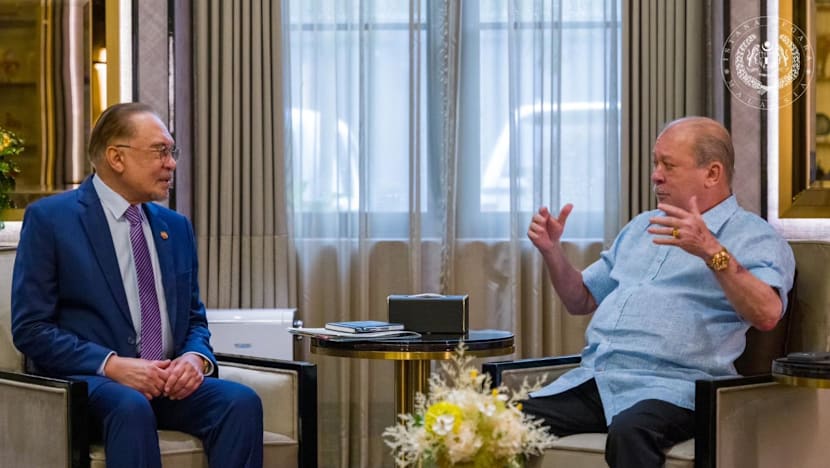
Malaysia Prime Minister Anwar Ibrahim held a meeting with Malaysian king Sultan Ibrahim Sultan Iskandar at Istana Bukit Tunku in Kuala Lumpur on Dec 16, 2025. (Photo: Facebook/Sultan Ibrahim Sultan Iskandar)

Speaking at the start of the press conference before he announced the changes, Anwar said: “There is a need to make some changes so that we have a Cabinet that works as a team, to focus on achieving higher economic growth and solving people's problems.” 

He had met the king Sultan Ibrahim Sultan Iskandar on Tuesday morning, and said in a Facebook post in the afternoon that he would make an announcement on the Cabinet at 3.30pm that day.

Among the changes he announced, Arthur Josep Kurup of the United Sabah People’s Party was appointed Natural Resources and Environmental Sustainability Minister, PKR vice-president R Ramanan was appointed Human Resources Minister while head of UMNO women’s wing Noraini Ahmad was appointed Minister for Plantations and Commodities. 

Democratic Action Party’s (DAP) Hannah Yeoh was reassigned from her Minister for Youth and Sports portfolio to be Minister in the Prime Minister’s Department (Federal Territories), with PKR’s Taufiq Johari taking her place.   

PKR’s Mustapha Mohd Yunus Sakmud was appointed Minister for Sabah and Sarawak while DAP’s Steven Sim was reassigned from his Human Resources portfolio to be Minister for Entrepreneur Development and Cooperatives. 

Senator and Islamic scholar Zulkifli Hasan was appointed Minister for Religious Affairs. 

The changes to Anwar’s Cabinet - including full minister and deputy minister positions - saw some members being reassigned while others were new appointments. 

Full ministers who were dropped completely from the line-up included PKR’s Zaliha Mustafa who was Minister in the Prime Minister’s Department (Federal Territories) and Minister for Religious Affairs Mohd Na’im Mokhtar. 

Na'im's exclusion was a surprise as he was sworn in as a senator for a second term on Dec 3. 

Notably, Malaysia's Education Minister Fadhlina Sidek retained her post despite facing criticism for her perceived lack of action and slow response on serious school issues like bullying, with student deaths triggering public outcry for her to resign. 

Earlier this month, three ministers were also sworn in as senators for a second term. Besides Na'im, they included Home Minister Saifuddin Nasution Ismail and Higher Education Minister Zambry Abdul Kadir. 

A minister in Malaysia must be an elected member of parliament (MP) in the lower house or an appointed senator in the upper house. 

On Dec 1, Anwar had said that a major reshuffle of his Cabinet is not on the cards, noting that his administration will “only function for a year plus” as Malaysia’s next general election is due by February 2028. 

However, there was speculation that changes to his Cabinet were imminent, with Tengku Zafrul stepping down from his Investment, Trade and Industry Minister portfolio earlier this month, creating a fourth ministerial vacancy. 

Tengku Zafrul had served for two terms as a senator since 2020. He held the trade minister post throughout his term in the Senate, which is the maximum period allowed.

Nik Nazmi Nik Ahmad had resigned as the Natural Resources and Environmental Sustainability Minister in May, while Ewon Benedick resigned as the Entrepreneur Development and Cooperatives Minister in November, ahead of the Sabah state elections.

Ewon had resigned over disagreements with the federal government on issues related to Sabah’s 40 per cent entitlement of federal net revenue derived from the state. 
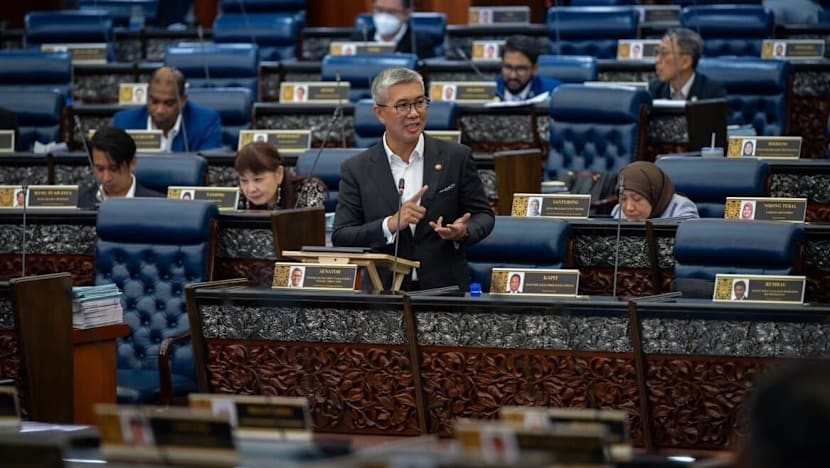
Former trade minister Tengku Zafrul Abdul Aziz on his last day in the Dewan Rakyat. (Photo: Instagram/@tzafrul_aziz)

Meanwhile, like Rafizi, Nik Nazmi had resigned following defeat in party elections within PKR.

Second Finance Minister Amir Hamzah took over the economy portfolio in the interim while Johari Ghani helped to handle natural resources and environment sustainability.

Ewon’s former portfolio was being managed by works minister Alexander Nanta Linggi starting Dec 3, local media reported.

ogger.googleusercontent.com/img/a/AVvXsEjYEqgqEpmTD03c4BAb9mHp2PpVknhgbLa_OW3ZcfXdMe_cdMdZwYGtqj0-eqpGQVh6kfEdYPIm4_ZbMV7XIT9GbOWPjY2DPzPHHFSchEQyw9cpwvdr2RlfNrP5cal_X8nyk22R77vR2eQrAovbzVXTCfdiRwx6qoWO4zoTtXeF0zTGgYGtr1RWPMb-tW0" style="margin-left: 1em; margin-right: 1em;">
Malaysia Prime Minister Anwar Ibrahim shows a list of his Cabinet appointments after announcing a reshuffle on Dec 16, 2025. (Photo: Prime Minister’s Office of Malaysia/Afiq Hambali)

KUALA LUMPUR: Malaysian Prime Minister Anwar Ibrahim announced sweeping changes to his Cabinet on Tuesday (Dec 16), ending weeks of speculation over ministerial vacancies.

Notable changes - among more than 25 announced - include the appointments of United Malays National Organisation (UMNO) stalwart Johari Ghani as the new Investment, Trade and Industry Minister and Parti Keadilan Rakyat’s (PKR) Akmal Nasir as Economy Minister. There are 65 Cabinet posts in total. 

Johari was previously Minister for Plantations and Commodities while Akmal was Deputy Minister of Energy Transition and Water Transformation. 

A composite image of newly-appointed investment, trade and industry minister Johari Ghani (left) and economy minister Akmal Nasir (right). (Photos: Facebook/Johari Abdul Ghani, Facebook/Akmal Nasir)

During the internal PKR polls in May, Akmal was seen as closely aligned to Rafizi Ramli, who resigned as Economy Minister after he was defeated by Anwar’s daughter Nurul Izzah in a contest to be the party’s deputy president. 

UMNO is an ally of Anwar’s Pakatan Harapan (PH) ruling coalition, and the investment, trade and industry portfolio was previously held by Tengku Zafrul Aziz, who was an UMNO member before leaving the party to join the prime minister’s PKR. 

Malaysia Prime Minister Anwar Ibrahim held a meeting with Malaysian king Sultan Ibrahim Sultan Iskandar at Istana Bukit Tunku in Kuala Lumpur on Dec 16, 2025. (Photo: Facebook/Sultan Ibrahim Sultan Iskandar)

Speaking at the start of the press conference before he announced the changes, Anwar said: “There is a need to make some changes so that we have a Cabinet that works as a team, to focus on achieving higher economic growth and solving people's problems.” 

He had met the king Sultan Ibrahim Sultan Iskandar on Tuesday morning, and said in a Facebook post in the afternoon that he would make an announcement on the Cabinet at 3.30pm that day.

Among the changes he announced, Arthur Josep Kurup of the United Sabah People’s Party was appointed Natural Resources and Environmental Sustainability Minister, PKR vice-president R Ramanan was appointed Human Resources Minister while head of UMNO women’s wing Noraini Ahmad was appointed Minister for Plantations and Commodities. 

Democratic Action Party’s (DAP) Hannah Yeoh was reassigned from her Minister for Youth and Sports portfolio to be Minister in the Prime Minister’s Department (Federal Territories), with PKR’s Taufiq Johari taking her place.   

PKR’s Mustapha Mohd Yunus Sakmud was appointed Minister for Sabah and Sarawak while DAP’s Steven Sim was reassigned from his Human Resources portfolio to be Minister for Entrepreneur Development and Cooperatives. 

Senator and Islamic scholar Zulkifli Hasan was appointed Minister for Religious Affairs. 

The changes to Anwar’s Cabinet - including full minister and deputy minister positions - saw some members being reassigned while others were new appointments. 

Full ministers who were dropped completely from the line-up included PKR’s Zaliha Mustafa who was Minister in the Prime Minister’s Department (Federal Territories) and Minister for Religious Affairs Mohd Na’im Mokhtar. 

Na'im's exclusion was a surprise as he was sworn in as a senator for a second term on Dec 3. 

Notably, Malaysia's Education Minister Fadhlina Sidek retained her post despite facing criticism for her perceived lack of action and slow response on serious school issues like bullying, with student deaths triggering public outcry for her to resign. 

Earlier this month, three ministers were also sworn in as senators for a second term. Besides Na'im, they included Home Minister Saifuddin Nasution Ismail and Higher Education Minister Zambry Abdul Kadir. 

A minister in Malaysia must be an elected member of parliament (MP) in the lower house or an appointed senator in the upper house. 

On Dec 1, Anwar had said that a major reshuffle of his Cabinet is not on the cards, noting that his administration will “only function for a year plus” as Malaysia’s next general election is due by February 2028. 

However, there was speculation that changes to his Cabinet were imminent, with Tengku Zafrul stepping down from his Investment, Trade and Industry Minister portfolio earlier this month, creating a fourth ministerial vacancy. 

Tengku Zafrul had served for two terms as a senator since 2020. He held the trade minister post throughout his term in the Senate, which is the maximum period allowed.

Nik Nazmi Nik Ahmad had resigned as the Natural Resources and Environmental Sustainability Minister in May, while Ewon Benedick resigned as the Entrepreneur Development and Cooperatives Minister in November, ahead of the Sabah state elections.

Ewon had resigned over disagreements with the federal government on issues related to Sabah’s 40 per cent entitlement of federal net revenue derived from the state. 

Former trade minister Tengku Zafrul Abdul Aziz on his last day in the Dewan Rakyat. (Photo: Instagram/@tzafrul_aziz)

Meanwhile, like Rafizi, Nik Nazmi had resigned following defeat in party elections within PKR.

Second Finance Minister Amir Hamzah took over the economy portfolio in the interim while Johari Ghani helped to handle natural resources and environment sustainability.

Ewon’s former portfolio was being managed by works minister Alexander Nanta Linggi starting Dec 3, local media reported.
Saturday, 13 December 2025

Hard to rewrite history

Loose cannon: Takaichi’s war talks have prompted Xi to call Trump to remind him that US and China were allies during WW2. — AFP

Japan’s new gov­ern­ment has had to take a crash course in inter­na­tional dip­lomacy as it learns for­eign policy on the job.

FROM curtailed Chinese tourism revenues to a suspended summit of Chinese, Japanese and South Korean leaders, Tokyo continues to reap the fallout from novice Prime Minister Sanae Takaichi’s combative style.

Just 17 days into taking office, she unnerved Chinese leaders by suggesting that Japan may attack China if Beijing forcibly reclaimed Taiwan. This was the most extreme declaration by any Japanese leader in decades.


Takai­chi’s far-right for­eign policy was not unex­pec­ted given her polit­ical record, but its extent and in com­ing so early in her term raised uncom­fort­able geo­pol­it­ical tem­per­at­ures.

Japan’s liab­il­it­ies in for­eign rela­tions con­tinue to grow, not only with China but also much of Asia dev­ast­ated by its war­time aggres­sion. China reacted most robustly because it suffered Imper­ial Japan’s worst depred­a­tions within liv­ing memory, with tens of mil­lions of civil­ians slaughtered and many more bru­tal­ised.

Unlike Ger­many that has fully atoned for its WWII atro­cit­ies, Japan has not. Takai­chi belongs to an ultrana­tion­al­ist fac­tion of the Lib­eral Demo­cratic Party and is a lead­ing mem­ber of the unre­pent­ant Nip­pon Kaigi (NK) organ­isa­tion that routinely denies Japan’s war crimes and praises its con­victed war crim­in­als as her­oes.

Japan and China may one day fully nor­m­al­ise rela­tions, but not yet. The wounds of war still run deep, their grav­ity fur­ther aggrav­ated by a gov­ern­ment that denies its hor­rors at the highest levels.

Hitler’s Holo­caust still haunts a post­war West that con­tin­ues to

give Israel a blank cheque to do any­thing. Revul­sion at Imper­ial Japan’s even worse mas­sacres in China may take longer to sub­side.

What upsets China fur­ther is Takai­chi’s cava­lier indif­fer­ence to the facts. Most coun­tries includ­ing the US and Japan have long had a one-china policy that does not recog­nise Taiwan as an inde­pend­ent nation, yet Japan’s Com­mon Defence doc­trine she cited for Taiwan applies only to assist­ance for sov­er­eign nations.

This implies that no basis exists for identi­fy­ing Taiwan’s per­ceived secur­ity interests with Japan’s. Even efforts to repu­di­ate Art­icle 9 of Japan’s post­war peace Con­sti­tu­tion through re-inter­pret­a­tion have been denounced by crit­ics as uncon­sti­tu­tional.

Attempts at re-inter­pret­a­tion to allow for greater assert­ive­ness are not widely accep­ted. It remains a highly con­tro­ver­sial issue at home and abroad.

Japan’s hope to become a ‘nor­mal coun­try’ no longer beholden to post­war US tutel­age is neither unreas­on­able nor lim­ited to ultra-con­ser­vat­ives, provided it can acknow­ledge its own past, recog­nise cur­rent real­it­ies and engage its neigh­bours fully with ‘nor­mal’ trust and con­fid­ence. That can­not hap­pen with revi­sion­ist lead­ers who are polit­ic­ally unre­formed and his­tor­ic­ally delu­sional bent on rewrit­ing his­tory.

Takai­chi’s state­ment about pos­sibly attack­ing a China that has not attacked it is reason enough for wide­spread alarm. Japan did pre­cisely that to China and a slew of other coun­tries by people who remain unapo­lo­getic about Pearl Har­bor and other tra­gedies.

That loose and dodgy inter­pret­a­tion of Japan’s national secur­ity interests promp­ted Pres­id­ent Xi to call up his US coun­ter­part and recount how China and the US were once allies in the war against fas­cism. Pres­id­ent Trump then advised Takai­chi to cool off.

Even Asian coun­tries inspired by Japan’s rapid indus­tri­al­isa­tion and eco­nomic growth remain wary of its ultra-nation­al­ists’ fas­cin­a­tion with remil­it­ar­isa­tion. Japan’s post­war rise was made pos­sible only with con­cili­at­ory rela­tions with its neigh­bours.

NK mem­bers have included former Prime Min­is­ters Shinzo Abe and Shi­geru Ishiba, but they have been less extreme than Takai­chi. Fol­low­ing her out­burst last month, Ishiba openly and repeatedly rep­rim­anded her.

Although the late Abe cham­pioned the Us-led Quad­ri­lat­eral Secur­ity Dia­logue (Quad) in try­ing to isol­ate China, he later relen­ted. In 2017 he declared Japan was ready to join the China-led Belt and Road Ini­ti­at­ive (BRI), and the fol­low­ing year Japan was reportedly engaged in sev­eral dozen BRI projects.

After los­ing WWII, Japan’s Yoshida Doc­trine relied on US pro­tec­tion to build its eco­nomic strength, developed the Fukuda Doc­trine to offer a meas­ure of war repar­a­tions, and issued the Murayama State­ment as a means to repair ties with neigh­bours. Now all those efforts may be under­mined, par­tic­u­larly when Trump is seek­ing peace with China and downs­iz­ing alli­ance oblig­a­tions all-round.

How Takai­chi’s admin­is­tra­tion now pro­ceeds with China will decide its own pro­spects. With eco­nomic stag­na­tion already in its fourth dec­ade, the Japan­ese ‘mir­acle’ is over.

But whether Japan then declines or can still thrive will depend on how, and if, it can work with a rising Asia helmed by Chinese entre­pren­eur­ship and pro­ductiv­ity.

Friday, 12 December 2025

Strength­en­ing your core


2

Dead bug with heel slide: 2. Slowly slide your heel out until your leg is straight, while keeping your spine neutral. Inhale as you pull your heel back and lift your leg back into the original position.repeat with the other leg. For beginners, do three sets of five repetitions; intermediate exercisers, three sets of 10, and advanced exercisers, five sets of 10.

YOUR core is like Wifi – when it’s weak, everything dis­con­nects.

1 Dead bug with heel slide: 1. Lie on your back with both your knees bent at 90° in the air. exhale fully to engage the core, then bring one foot down to touch the floor. — Pho­tos: dr Sit­ara­marao nageswer­arav

A hun­dred sit-ups a day won’t give you a strong core.

That’s because the core isn’t just your abs (abdom­inal muscles) – it’s the net­work of deep muscles around your stom­ach, back and hips that keeps your body bal­anced, sup­por­ted and stable.

Your core is your body’s cent­ral sta­bil­iser, even your spine depends on it for sup­port.

Decreased move­ment or over­do­ing a move­ment, coupled with weight gain and poor nutri­tion, weak­ens the spine and con­nect­ive tis­sues, caus­ing the lat­ter to wear down.

This even­tu­ally leads to chronic lower back pain, disc her­ni­ation and poor pos­ture.

The four lay­ers of the core con­sist of:

> Deep core sta­bil­isers - the 

inner “cor­set” muscles > Super­fi­cial core movers - the vis­ible abs

> Lat­eral and pos­terior core - the core-to-hip con­nect­ors > Func­tional net­work - sup­port­ing sta­bil­isers for every­day move­ment.

A strong core:

> Keeps your pos­ture upright

and con­fid­ent

> Pro­tects your back from injury,

and

> Improves bal­ance and every­day move­ment.

When the core is weak, the spine loses its nat­ural brace.

Spinal seg­ments start to shear and com­press, lead­ing to chronic lower back pain, disc her­ni­ation and poor pos­ture.

Your pos­ture is a mir­ror of your health, so pay atten­tion to it!

Other effects include:

> A roun­ded upper back (kyphosis)

> Pel­vic tilt or exag­ger­ated lumbar curve

> Core inhib­i­tion and glu­teal amne­sia (yes, your butt can “for­get” how to work).

The longer you sit, the more your core muscles dis­en­gage, caus­ing your brain to “for­get” about them.

From the age of 35 onwards, muscle mass begins to decline.

The deep sta­bil­isers, such as the trans­versus abdominis, are often the first to weaken because they’re rarely activ­ated in daily life.

Even reg­u­lar gym-goers tend to train what they can see (e.g. arms, chest and legs), rather than what they can feel (e.g. the deep core).

However, you don’t need fancy machines to train your core. Try this instead:

> Tighten your abdom­inal wall (like bra­cing for a gentle punch) while walk­ing, climb­ing stairs or car­ry­ing gro­cer­ies.

> Sit tall, walk upright and stretch for five minutes every half-an-hour of sit­ting. Small adjust­ments in breath­ing and pos­ture make a big dif­fer­ence.

Two other power­ful core exer­cises you can do at home are:

> Dead bug with heel slide (deep core repat­tern­ing)

This exer­cise tar­gets the trans­verse abdominis, pel­vic sta­bil­isers and deep spinal flex­ors.

It retrains coordin­a­tion between the dia­phragm, core and your pel­vic floor – all cru­cial for pos­ture and spine sup­port. > Half-kneel­ing pal­lof press (rota­tional sta­bil­ity for real life)

This exer­cise tar­gets the obliques, mul­ti­fidus, glu­teus medius and trans­versus abdominis.

It builds anti-rota­tion strength – the body’s defence against twist­ing stress dur­ing daily activ­it­ies.

As uncon­ven­tional as these moves may seem, they’re backed by solid research and proven to improve func­tional strength and pos­ture.

The core doesn’t age – we do. Train it now or pre­pare to make friend­ship brace­lets with your chiro­practor later.

Dr Sit­ara­marao Nageswer­arav is a gen­eral prac­ti­tioner (GP) and cer­ti­fied fit­ness trainer. This is the first of a three-part series, which will be pub­lished fort­nightly. For more inform­a­tion, email star­health@the­star.com.my.

The inform­a­tion provided is for edu­ca­tional and com­mu­nic­a­tion pur­poses only, and should not be con­sidered as med­ical advice. The Star does not give any war­ranty on accur­acy, com­plete­ness, func­tion­al­ity, use­ful­ness or other assur­ances as to the con­tent appear­ing in this art­icle. The Star dis­claims all respons­ib­il­ity for any losses, dam­age to prop­erty or per­sonal injury suffered dir­ectly or indir­ectly from reli­ance on such inform­a­tion.

2

Half-kneel­ing pal­lof press: 2. Hold the band at your chest, then stretch your hands for­ward slowly without releas­ing the band. res­ist the urge to rotate.

For begin­ners, do three sets of five repe­ti­tions; inter­me­di­ate exer­cisers, three sets of 10, and advanced exer­cisers, five sets of 10.
1

Half-kneel­ing pal­lof press: 1. Tie or anchor a res­ist­ance band to a strong grill, pole or item that won’t move eas­ily. Kneel on one knee, while pulling the res­ist­ance band with your arms to your chest.

7 Great Core Strengthening Exercises - Ask Doctor Jo  
896,950 views 22 Mar 2018
Core strengthening exercises are great for improving your core strength. They can help prevent injury, increase core stability, and improve balance. I start with some beginner core exercises & then progresses to harder ones. More core exercises:    • Swiss Ball Core & Back Strengthening Exerc...   Progress through these core strength exercises at your own pace. If this is your first time doing core exercises, you may not be ready for the last ones yet. It's better to do the easy ones first and then see how you feel the next day. The first exercise is a pelvic tilt. This is great to get the core moving, and strengthening the whole pelvic area. The second core exercise is going into a bridge. This not only works your core, but it also works your glutes and hamstrings. If two legs are easy, you can do them with one leg at a time. The third exercise is with a Swiss or therapy ball. A prayer plank on the ball is a great way to activate your core. You can do this modified or a full plank. Next you will do a trunk rotation lying down with your feet on the ball. This is great for your oblique muscles. You can also do the trunk rotation seated on the ball. Using a weight will give you an extra workout, but you don’t have to use one. Now for some harder ones for core strengthening. This one is in tall kneeling, and you will lean back slightly. You can have someone hold onto your feet, or you can place them under something for support. When you are ready, you can do them without any support. This works your core, glutes, hamstrings, and quads. Finally you will do a standing march with elbow tap. You can do this on the same side or opposite sides. Try not do bend your back forward, and use your core to lift your knees. Related Videos: Back Pain Core & Back Strengthening Exercises:    • Back Pain Core & Back Strengthening Exerci...   Exercise Ball Core and Back Strengthening Exercises (Moderate):    • Exercise Ball Core and Back Strengthening ...  
.